Asian Eyelid Surgery: Double Eyelid Procedure Overview
Asian eyelid surgery creates a defined crease in the upper eyelid for patients who have a monolid or faint fold. Also called double eyelid surgery or Asian blepharoplasty, this procedure is one of the most commonly requested cosmetic surgeries among people of Asian descent., with eyelid surgery now the #1 cosmetic surgical procedure globally.
The procedure enhances eye definition while preserving your natural ethnic features. Below, we cover the techniques available, what makes you a good candidate, and what to expect from consultation through recovery.
What is Asian eyelid surgery
Asian blepharoplasty creates or enhances a supratarsal crease in the upper eyelid. About half of people of Asian descent naturally lack this visible fold, sometimes called a monolid or single eyelid. The procedure forms a defined crease that opens up the eye area while preserving your natural ethnic features.
So what exactly is a "double eyelid"? It simply refers to having a visible crease above your lash line when your eyes are open. This crease creates two distinct sections on the upper lid. A single eyelid, on the other hand, has a smooth surface from lash line to brow with no fold.
The goal here is subtle refinement, not dramatic change. You'll still look like you, just with more defined, refreshed eyes.
Why Asian eyelid anatomy requires specialized techniques
Standard eyelid surgery designed for aging concerns doesn't work well for crease creation. Asian eyelids have distinct structural differences that require a different approach entirely.
- Orbital septum fusion: In Asian eyelids, this tissue attaches lower on the lid, which prevents a natural crease from forming on its own.
- Fat positioning: More fullness sits in the upper eyelid because of where fat naturally rests within the lid structure.
- Epicanthal fold: This skin fold at the inner corner of the eye is common in Asian eyelids and affects overall eye shape.
- Missing skin attachments: Non-Asian eyelids typically have connections between skin and underlying muscle that create a crease. Asian eyelids often lack these connections.
A surgeon experienced in Asian blepharoplasty knows how to work with your anatomy rather than against it. This same anatomical awareness applies to Asian rhinoplasty, where preserving ethnic harmony is equally essential. It matters for achieving results that look natural on your face.
Asian blepharoplasty vs. traditional upper eyelid surgery
Both procedures involve the upper eyelid, but they address completely different concerns. Traditional blepharoplasty removes excess skin and fat that accumulates with age. Asian eyelid surgery creates a new crease where none exists. If you have a monolid and want crease creation, traditional blepharoplasty alone won't give you what you're looking for. The surgical goals and techniques are fundamentally different. For under-eye puffiness or bags, lower blepharoplasty is a separate procedure that targets the area beneath the eye.
Types of double eyelid surgery techniques
Your surgeon will recommend an approach based on your eyelid anatomy, skin thickness, fat distribution, and personal goals. Each method has distinct advantages worth understanding.
Incisional double eyelid surgery
This method involves a full incision along the desired crease line. Your surgeon can remove excess skin, fat, or muscle if needed, creating a permanent crease with predictable results.
Incisional surgery works well for patients with thicker skin, more eyelid fat, or those who want definitive, long-lasting results. The incision heals within the natural crease, so scarring becomes virtually invisible once fully healed. For patients with excess skin closer to the brow, a sub-brow excision can complement the result.
Partial incision technique
This middle-ground option uses a smaller incision than the full method while offering more permanence than sutures alone. It allows for limited fat removal with reduced scarring.
Partial incision works well for patients who need some tissue adjustment but don't require extensive reshaping.
Who is a good candidate for Asian eye surgery
A consultation determines candidacy based on your unique eyelid structure and aesthetic goals. During this evaluation, your surgeon assesses skin thickness, fat distribution, and existing crease characteristics.
Ideal candidates typically include:
- Individuals with a single eyelid (monolid) and no visible crease when eyes are open
- Patients with a faint, uneven, or asymmetric crease they want to define (if one eyelid droops significantly lower, ptosis correction may be needed instead)
- Adults with realistic expectations who understand results enhance natural features
- People in good overall health without conditions that impair healing
Age matters less than anatomy. Both younger patients seeking crease creation and older patients wanting crease refinement can benefit from this procedure. For older patients, an endoscopic brow lift may be paired with eyelid surgery to fully open the eye area.
What to expect during Asian eyelid surgery
Knowing each step helps you prepare and feel confident about your procedure. The entire process typically takes 60 to 90 minutes and can be performed safely under local anesthesia.
1. Consultation and eyelid analysis
Dr. Kim evaluates your eyelid anatomy, including skin thickness, fat distribution, and any existing crease asymmetry. You'll discuss your goals and review which technique best suits your features.
2. Preoperative preparation
You'll receive instructions on medications to avoid before surgery and what to arrange for your recovery day.
3. Crease design and marking
On the day of surgery, your surgeon marks the precise crease location while you're upright. This ensures natural positioning that complements your facial proportions.
4. Tissue adjustment and crease formation
After administering local anesthesia, your surgeon performs the chosen technique. For incisional methods, excess tissue is removed and connections are created between skin and deeper structures to form the crease.
5. Closure and immediate aftercare
Fine sutures close any incisions. You'll receive cold compresses, ointment, and detailed aftercare instructions before going home the same day.
Understanding the risks of Asian eyelid surgery
When performed by an experienced surgeon, complications are uncommon. However, understanding potential risks helps you make an informed decision.
- Asymmetry: Uneven crease height or shape that may require revision
- Scarring: Though incisions typically heal well within the crease
- Crease positioning: A crease that's too high or low may look unnatural
- Temporary swelling and bruising: Expected and resolves within one to two weeks
- Suture loosening: Non-incisional methods may lose effectiveness over time
Revision surgery is possible but more complex than the initial procedure. Choosing an experienced surgeon and clearly communicating your goals during consultation significantly reduces risk.
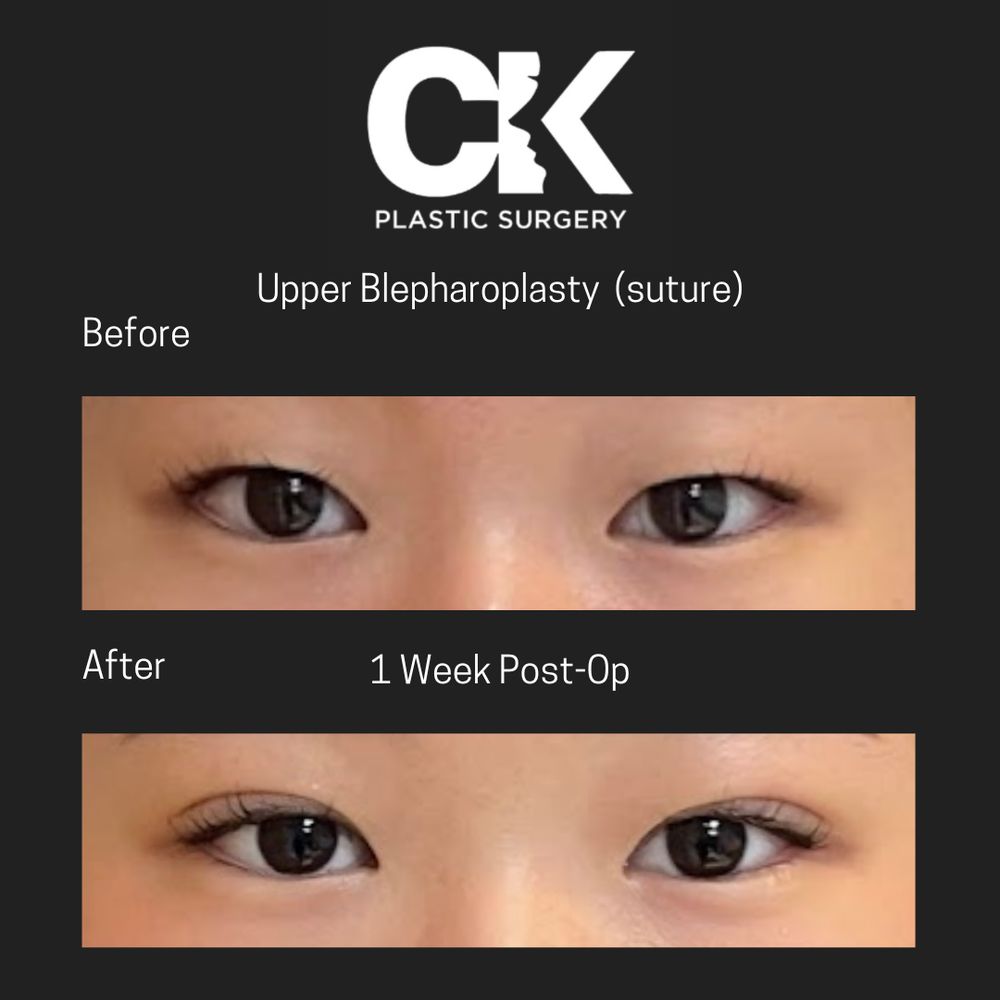
Asian double eyelid surgery before and after results
Viewing before and after photos helps you visualize potential outcomes and set realistic expectations. When reviewing photos, look for natural crease height, symmetry, and preserved ethnic features.
Results vary based on individual anatomy and the technique used. Dr. Kim's approach focuses on creating results that look like a natural version of you.
View Before & After Images
Schedule your Asian eyelid surgery consultation in Los Angeles
Expert care starts with a personalized consultation. Dr. Charles Kim brings specialized expertise in Asian eyelid surgery with a commitment to natural-looking results that preserve your ethnic identity.
At CK Plastic Surgery in Los Angeles Koreatown, we offer bilingual, community-focused care. Our team takes time to understand your goals and answer your questions so you can move forward with confidence.
Schedule Consultation | Call (213) 382-4900
Frequently asked questions
How much does Asian eyelid surgery cost?
Cost varies based on the technique used, surgeon experience, and geographic location. The suture method is generally less expensive than incisional surgery. A consultation provides a personalized quote based on your specific treatment plan.
How long does Asian blepharoplasty last?
Incisional techniques typically produce permanent results. Non-incisional suture methods may last around seven years before requiring a touch-up. Your surgeon will recommend the most durable option based on your anatomy.
What is the regret rate for double eyelid surgery?
Patient satisfaction is generally high Patient satisfaction reaches approximately 89% when realistic expectations are set and an experienced surgeon performs the procedure. Choosing a board-certified plastic surgeon who specializes in Asian eyelid anatomy helps ensure results you'll be happy with.
Can Asian eyelid surgery be reversed or revised?
Revision surgery is possible but more complex than the initial procedure, especially for incisional techniques. Selecting an experienced surgeon and clearly communicating your goals during consultation is essential from the start.
Will Asian eyelid surgery results look natural or Western?
A skilled surgeon creates a crease that complements your unique facial features and preserves your ethnic identity. Patients who also want to refine their nose profile often pair this with rhinoplasty for balanced facial harmony. The goal is enhancement that looks like a natural version of you, not mimicking Western characteristics.