
Ptosis Surgery: Droopy Eyelid Correction
This guide covers what causes ptosis, the surgical techniques used to fix it, what recovery looks like, and how to know if correction is right for you.
Related Procedure
Ptosis CorrectionThis guide covers what causes ptosis, the surgical techniques used to fix it, what recovery looks like, and how to know if correction is right for you.
Related Procedure
Ptosis CorrectionA drooping eyelid can make you look tired even when you feel perfectly awake—and in some cases, it can actually interfere with your vision. Ptosis surgery corrects this by tightening the muscle that lifts your upper lid, restoring both function and a more alert appearance.
This guide covers what causes ptosis, the surgical techniques used to fix it, what recovery looks like, and how to know if correction is right for you.
Ptosis surgery is an outpatient procedure that corrects droopy eyelids by tightening the levator muscle—the muscle responsible for lifting your upper lid. The surgeon makes a small incision hidden in the natural eyelid crease, adjusts the muscle, and closes with fine sutures that come out within a week. Most people return to normal activities in about seven days, though final results take two to three months as swelling fully resolves.
Ptosis (pronounced "TOE-sis") simply means a drooping upper eyelid. The word comes from Greek, meaning "to fall." When your levator muscle weakens or stretches, the lid drops lower than it normally sits—sometimes just slightly, sometimes enough to cover part of your pupil.
You might notice a tired or sleepy look even when you feel perfectly rested. In more pronounced cases, the drooping lid can actually block your upper field of vision, making everyday tasks like reading or driving more difficult than they used to be.
Several factors can lead to a drooping eyelid. Knowing the underlying cause helps determine the best approach to correction.
This is the most common type. Over decades of blinking—roughly 15,000 times per dayThis is the most common type, affecting over 20% of adults aged 70 and older. Over decades of blinking—roughly 15,000 times per day—the levator muscle gradually stretches and its attachment loosens. Doctors call this aponeurotic ptosis, and it tends to develop slowly in your 50s, 60s, or beyond.
Some people are born with an underdeveloped levator muscle. In children, early treatment matters because a drooping lid can block visual development and lead to amblyopia, commonly known as lazy eye. in nearly one-third of cases, commonly known as lazy eye.
Ptosis can also signal an underlying health issue:
Eye injuries, previous procedures like cataract surgery, or years of wearing hard contact lenses can all stretch or damage the levator muscle over time.
How do you know if ptosis correction is worth considering? A few patterns tend to show up:
If any of this sounds familiar, a consultation can help clarify whether surgery would make a meaningful difference for you.
The right surgical approach depends on how severe your ptosis is and how well your levator muscle still functions. Dr. Kim assesses both during your consultation.
This is the most common technique for moderate to severe ptosis when the levator muscle still works reasonably well. The surgeon makes an incision in your natural eyelid crease, tightens the levator, and reattaches it in a higher position. The scar hides in the crease and typically fades over time.
For milder cases, the surgeon can work from the inside of the eyelid instead. This approach shortens the Müller's muscle—a smaller muscle that provides secondary lift—without any visible external incision. Recovery tends to be slightly quicker, though it's not suitable for everyone.
When the levator muscle has very poor function, often in congenital cases, a different strategy is needed. The surgeon connects the eyelid to the frontalis muscle in your forehead using a thin sling made of silicone or similar material. This allows you to lift your eyelid by raising your eyebrow.
At CK Plastic Surgery, we walk you through each step so you know exactly what to expect.
Dr. Charles Kim examines your eyelids carefully, measuring how much they droop and testing how well your levator muscle functions. He'll discuss your goals—whether primarily cosmetic, functional, or both—and recommend the technique that fits your situation.
Before surgery, you'll receive specific instructions. This typically includes avoiding blood-thinning medications for a period of time and arranging for someone to drive you home afterward.
The procedure happens on an outpatient basis, meaning you go home the same day. Local anesthesia with light sedation keeps you comfortable—you won't feel pain, though you may be aware of some pressure or movement. The surgery itself usually takes 30 to 90 minutes depending on complexity.
Right after surgery, you'll rest with your head elevated and apply cold compresses to reduce swelling. Lubricating drops or ointment help keep your eyes comfortable during the first few days.
Recovery moves faster than many people expect. Here's a general timeline:
TimeframeWhat to ExpectDays 1–3Swelling and bruising peak; rest and cold compresses helpWeek 1Sutures removed; most people return to desk workWeeks 2–4Bruising fades; gradual return to normal activitiesMonths 2–3Final results visible as all swelling resolves
During recovery, it helps to avoid:
Ptosis surgery has a strong track record when performed by an experienced surgeon. Still, like any procedure, it carries some risks worth understanding.
Temporary side effects are common and expected:
Less common complications include infection, bleeding, or asymmetry that doesn't resolve on its own. In a small percentage of cases, a touch-up procedure may be recommended if the correction is slightly over or under what was intended. Careful pre-operative planning and precise technique minimize these risks.
Surgery isn't the only path. For very mild ptosis or for people who aren't ready for a procedure, a few alternatives exist—though none offer permanent correction.
Cost varies based on several factors: whether one or both eyes need correction, which surgical technique is used, and the complexity of your case.
Insurance often covers ptosis repair when it's medically necessary—meaning the drooping lid significantly obstructs your vision. Documentation typically requires a visual field test showing measurable impairment. Purely cosmetic cases are usually out-of-pocket expenses.
During your consultation at CK Plastic Surgery, we provide a detailed estimate based on your specific situation and can help clarify what documentation your insurance may require.
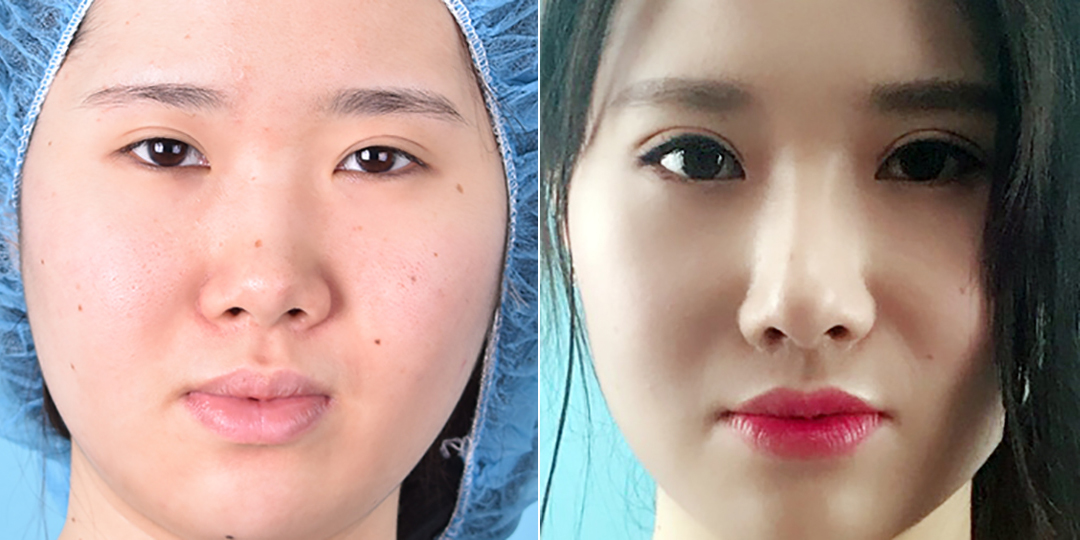
Real patient photos offer the clearest picture of what ptosis correction can achieve. Results typically show a more open, alert eye appearance, improved symmetry between the eyelids, and a refreshed look that still feels natural.
Dr. Kim's approach prioritizes results that enhance your appearance without changing your fundamental expression—you'll still look like yourself, just more awake.
Yes, and this combination is quite common. Ptosis repair addresses the muscle weakness causing the droop, while upper blepharoplasty removes excess skin that may be contributing to a heavy lid. Doing both together—or adding sub-brow excision when excess skin extends above the crease—can achieve more complete rejuvenation in a single recovery period.
Results are typically long-lasting, often permanent. However, aging continues, and some patients may notice gradual changes over many years. Most people enjoy their results for a decade or longer before any touch-up might be considered.
You'll see improvement right away, but swelling takes time to fully resolve. Most patients see their final results around two to three months after surgery, once the tissues have completely settled.
The incision sits within your natural eyelid crease, so once healed, any scar is essentially hidden. Over time, it typically fades to become nearly invisible.
Most patients describe minimal discomfort. Local anesthesia with sedation means you won't feel pain during the procedure. Afterward, mild soreness is common but usually manageable with over-the-counter pain relievers or a short course of prescribed medication.
Ptosis repair corrects a drooping lid by tightening the levator muscle—it's both functional and cosmetic. Double eyelid surgery (Asian blepharoplasty) creates or enhances an upper eyelid crease but doesn't address muscle function. Some patients benefit from both procedures together, and others may also consider lateral canthoplasty for further eye shape refinement.